

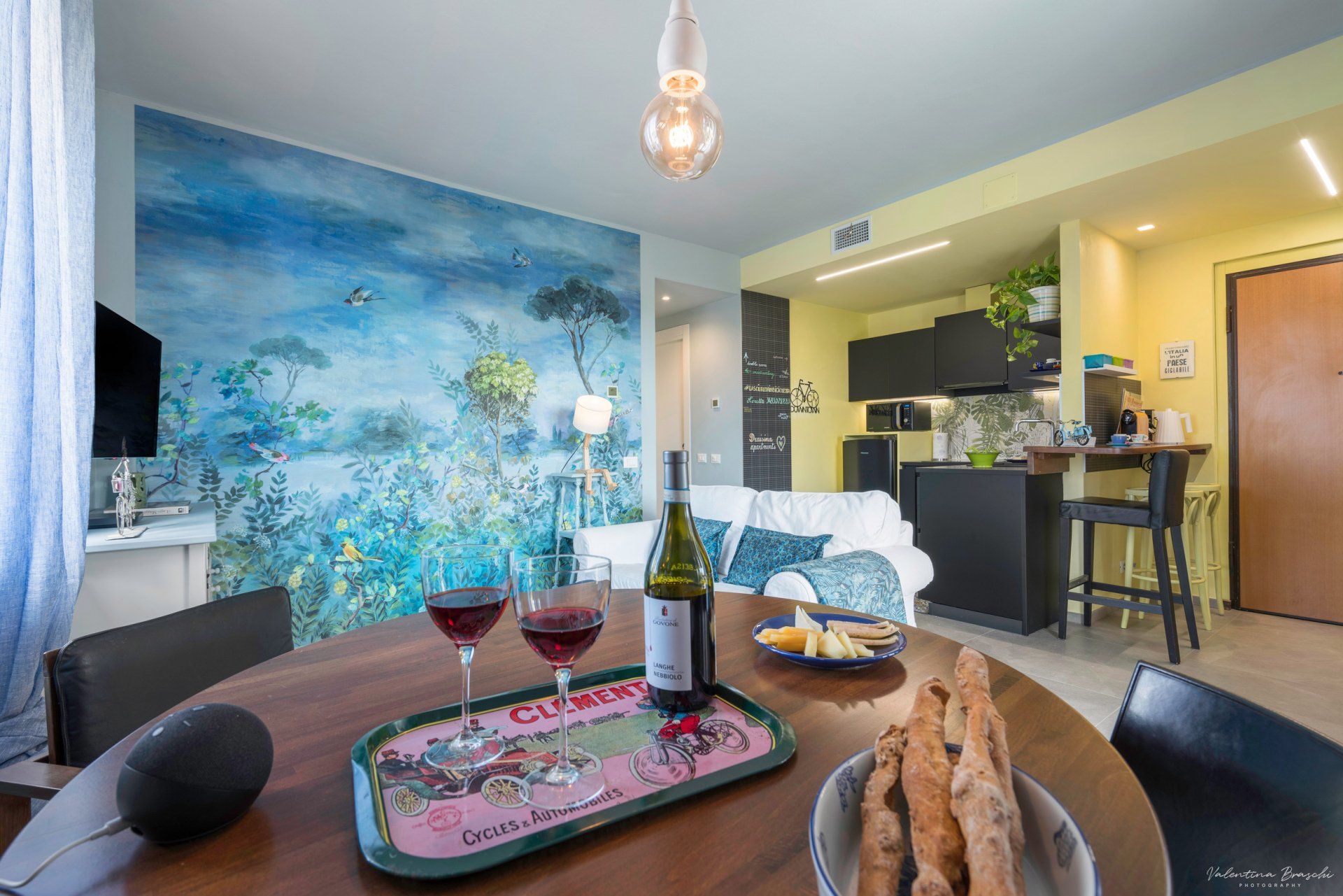
Draisina Bike Apartments
Apartments designed by cyclists for cyclists
Accomodation designed by cycle tourist for cycle tourists
Draisina Uno
Draisina Due
Draisina Room
I'll guide you to amazing places
Oleggio Castello: Where Every Road Leads to Discovery
There are places you simply pass through.
And there are places that invite you to slow down.
Oleggio Castello is one of them.
Nestled among the hills overlooking Lake Maggiore, it is where history meets nature, and where, within just a few minutes, you can journey from a magnificent 19th-century castle to a UNESCO World Heritage forest, from a lakeside aperitivo to a peaceful trail surrounded by silence.
It may seem like a small village on the map.
In reality, it is the heart of an extraordinary region
Amenities
Here's what you'll find available in the apartments
Draisina ONE & TWO 3 PEOPLE MAX 2 BEDROOMS 2 BEDS 1 BATHROOM
Draisina Bike Room
2 PEOPLE MAX
1 CAMERA
1 BEDS
1 shared BATHROOM
garden view
DRAISINA UNO & DUE
- The heating is electric underfloor with different temperatures in each room.
- Ducted air conditioning
- Iron, clothes horse, vacuum cleaner
- Work area with desk, space for a laptop and a comfortable chair to work on
- USB sockets
- Interactive TV - Netflix -
- Amazon Prime
- satellite channels -
- Fast Wi-Fi
BEDROOM AND BATHROOM
- High-quality cotton sheets, extra pillows, hangers, and blankets.
- Towels and bath towels
- Shower mat Hairdryer - Shampoo - Shower gel
- Hand soap and toilet paper. Magnifying mirror.
- 80 x 170 floor-level shower
Our linen comes from a certified company
UNI EN ISO 9001:2015-
UNI EN ISO 14001:2015
UNI EN ISO 14065:2016
KITCHEN
- Pots and pans, glasses, wine glasses
- salad bowls, bowls, plates and cutlery knives
- cutting boards - pot holders - pot holders
- Microwave
- Oven
- Refrigerator
- Induction hob
- oil, salt and pepper
- coffee machine - coffee capsules
- Kettle - tea, herbal teas - sugar
- Sodastream sparkling water bottles
- Placemats - Scottex
- toaster
- electric juicer
EXTERNAL
Draisina Uno, Due o Room.....
Relax: you're home........
something about me....
Welcome!
My name is Loretta and cycling is my great passion:
my family has been in the bicycle business for over 25 years, running a shop that sells, hires and repairs bikes.
For several years now, I’ve been getting around exclusively by e-bike and haven’t used a car.
I have mapped out and prepared many cycle routes for those who wish to explore the area at a leisurely and sustainable pace, sharing this passion with me.
I am also the president of FIAB Arona Felici in Bici, an association that promotes sustainable mobility and the local area.
Our home is located just 500 metres from the entrance to the Parco dei Lagoni di Mercurago, a natural area of extraordinary beauty and a recognised UNESCO site.
Authentic hospitality
I have always loved meeting different people, cultures and traditions. For me, hospitality means offering not just a place to stay, but also an experience of well-being, warmth and respect for the environment.
I have personally designed and furnished my apartments with creativity and care, repurposing objects and furniture to create original and unique spaces that combine warmth and authenticity.
Sustainability and comfort
I strongly believe in a sustainable lifestyle and wanted this to be an integral part of my hospitality. That is why:
I use a tap water carbonator to make fresh, delicious sparkling water, thereby reducing plastic consumption;
bed and bath linen comes from a certified supplier, guaranteeing quality and environmental responsibility;
separate waste collection is part of our daily routine;
underfloor heating with adjustable temperature in every room ensures optimal comfort and responsible energy use;
solar panels generate renewable energy, helping to reduce our environmental footprint;
a charging point for electric cars is available for those travelling sustainably.
During the summer season, guests can also enjoy free produce from our garden, for an authentic experience connected with nature.
I look forward to welcoming you to share not just accommodation, but a lifestyle characterised by hospitality, care and respect for the environment.
Loretta
Origin of the name DRAISINA
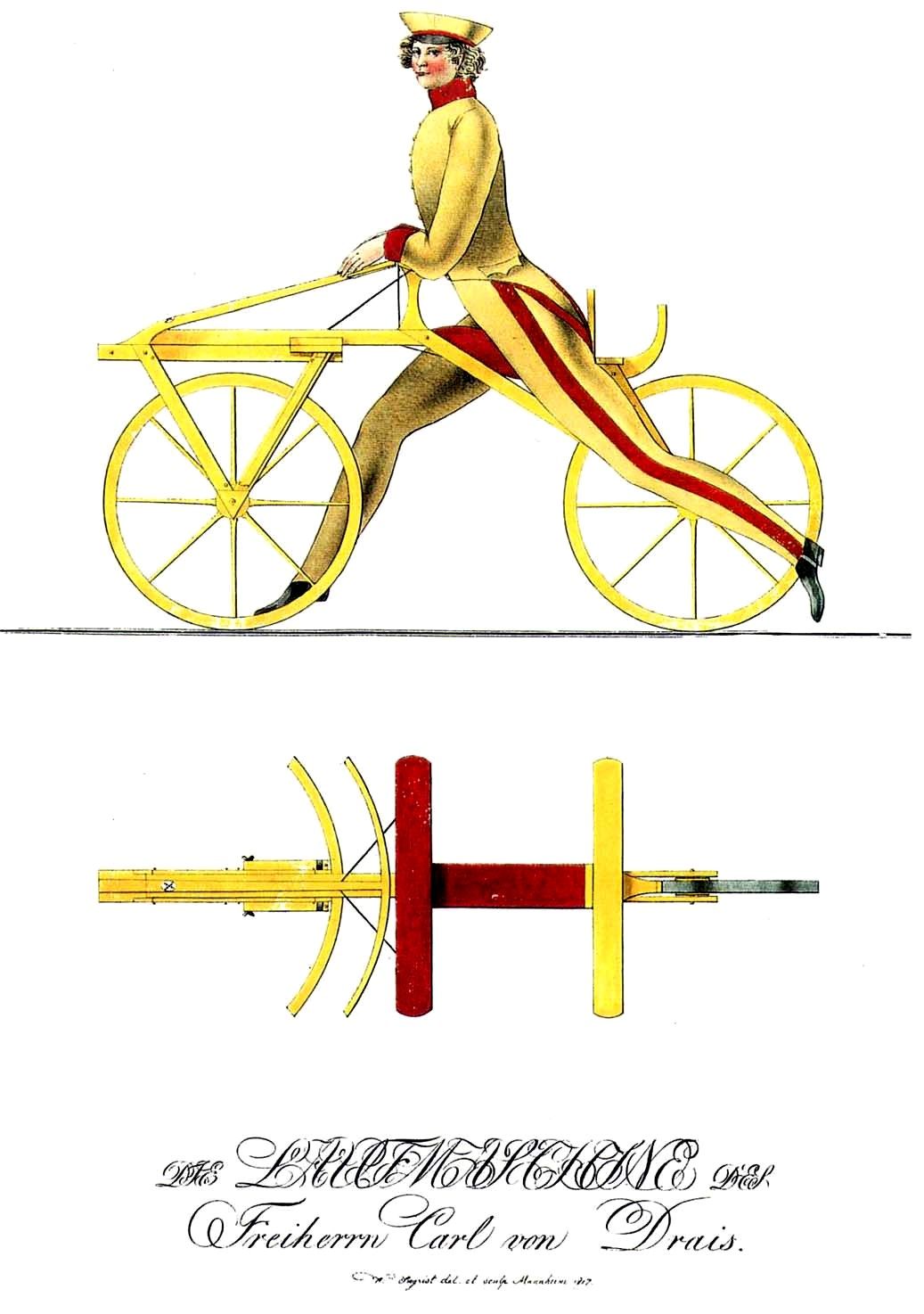
I chose the name "Draisina" because it is the "mother" of the bike!
Karl Friedrich Christian Ludwig Freiherr Drais von Sauerbronn in breve Karl Drais.
In December 1813 in Karlsruhe he presented to Tsar Alexander I, who was travelling to the Congress of Vienna, the first of these two machines, equipped with four wheels and called Fahrmaschine ("travelling machine"). The Tsar was enthusiastic about it and even gave him a diamond ring, but the machine was not a success.[1] The second machine, which he called Laufmaschine ("running machine"), was instead equipped with two wooden wheels with eight spokes each and a movable handlebar for direction and moved forward thanks to the push of the feet on the ground.[1] This was the vehicle later known as the draisine, a primitive version of a bicycle without pedals.
The first recorded journey took place on 12 July 1817 from Mannheim to Schwetzingen (now a suburb of Mannheim) and back, a distance of 28 kilometres, covered by Drais himself on his Laufmaschine.[1] In the same year he made a second journey from Gernsbach to Baden-Baden and another from Karlsruhe to Kehl, a distance of 78 kilometres.[1] On 12 January 1818, the Grand Duke of Baden, Charles II, awarded Drais the Großherzogliches Privileg, similar to the patent of today,[1] for the invention of the Laufmaschine (at that time there was no specific legislation on the matter in Baden). Charles II also awarded Drais the title of Professor of Mechanics – this was simply an honorary title, which had nothing to do with the university or other institutions.
France also granted the Baron a patent on February 17, 1818, for what was called for the first time in French vélocipède or, from the name of the inventor, draisienne. On April 5, 1818, the new vehicle was demonstrated in the Luxembourg Gardens in Paris.[1] The Journal de Paris announced a paid show, a velocipede race to be held on a course of three hundred fathoms, equal to 585 meters.[1] Tickets cost one and a half francs for men, one franc for women, and half a franc for children: 3,000 spectators attended the event and 3,600 francs were collected. The event aroused curiosity, but did not inspire enthusiasm; nevertheless, the use of the draisine began to spread.[1]
In the same year, Prussia, Bavaria and, on December 22, England also granted Drais a patent (here the draisine was called a hobby horse, that is, "amusement horse"); in 1819, Belgium and the United States also did so. However, the application was initially rejected in Vienna, the capital of the Austrian Empire, and in Frankfurt, the capital of the German Confederation.[1] The machine would, however, undergo further modifications in the following decades, until the introduction of the pedal, attributed to Pierre Michaux, and the birth of the modern bicycle.
During the same period, Drais retired from civil service, but continued to receive his salary as a pension. From 1822 to 1825, he participated in a German expedition to Brazil, organized by Georg Heinrich von Langsdorff. Drais was a staunch democrat and in 1849 renounced his noble title and the von part of his surname. After the failure of the bourgeois revolution of 1848-1849, royalists attempted to have him declared insane and interned. His pension was confiscated, and Drais died in poverty in 1851.
CONTACT US
Fill out the form for availability and prices at Draisina Bike Apartments.
availability info
